
Our Collection
From traditional black tea to rare African white tips, oolong, and moringa, our catalog spans the full range of commercial tea and botanical applications. Regeneratively grown, third-party tested, and fully traceable.
USDA Organic Certified
Certified organic options available across our full catalog
Fair Trade Certified
100% fair trade certified ingredients, fair wages, fair practices
ISO Certified Partners
Our partner factories hold ISO 22000 food safety certifications
Our Collection
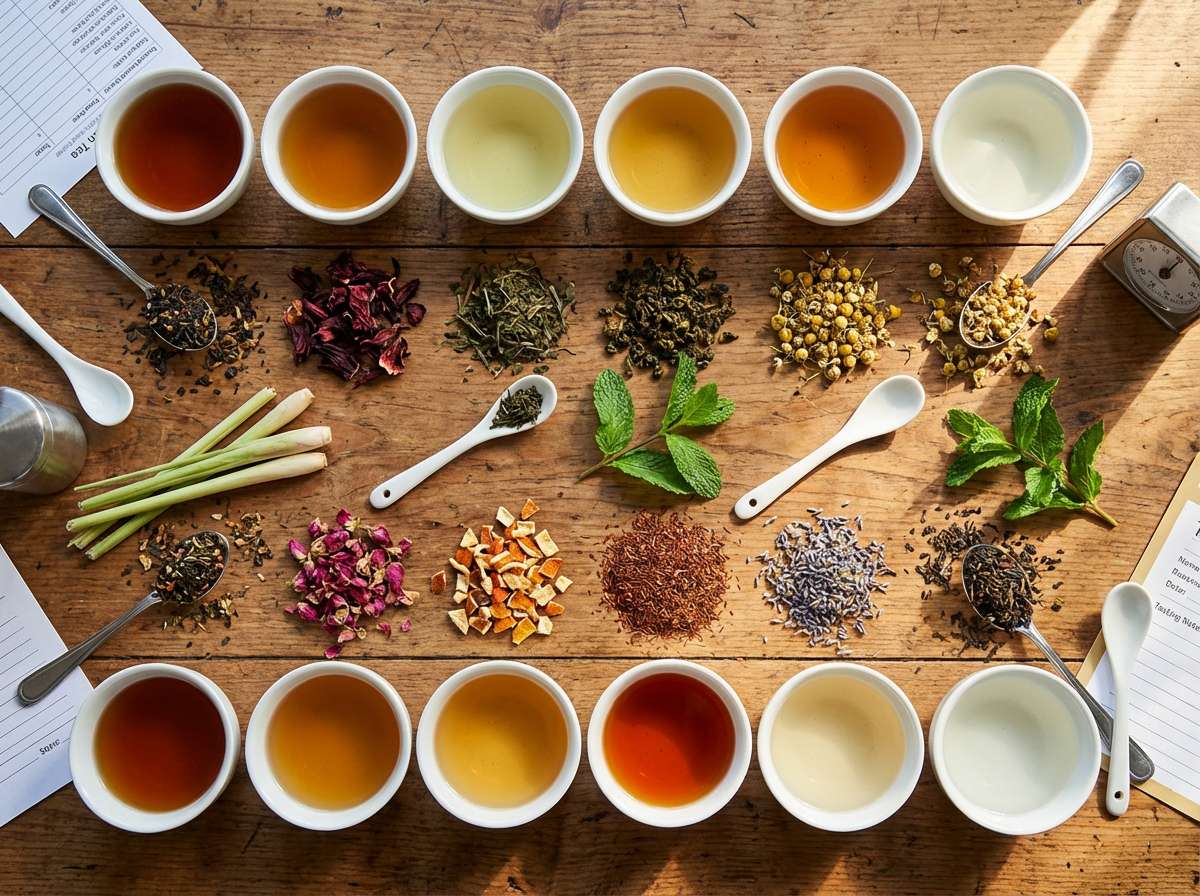
All of our caffeinated teas come from the Camellia sinensis tea plant. We also carry caffeine-free rooibos, honeybush, and select botanicals for blending and standalone formulations.
Black Tea
Orthodox, CTC, and specialty grades. Bold, malty body ideal for RTD, kombucha, and blending. Decaffeinated black tea also available.
Green Tea
Steamed and roasted options with distinct character by origin. Rich in EGCG catechins. Clean, versatile base for functional beverages.
White Tea
Delicate and nuanced. Increasingly sought after for premium and functional beverage applications.
Oolong
Rare for Africa and exceptional. Partial oxidation creates a complex profile between green and black tea. Available from Malawi.
Rooibos & Honeybush
Caffeine-free, naturally sweet. Cultivated and wild harvest rooibos from South Africa. Red and green rooibos plus honeybush available. Organic and Fair Trade options.
Botanicals
Lemon Verbena, Spearmint, Lemongrass, Hibiscus, and Moringa. Caffeine-free options for custom formulations and blending.
Why East Africa Is the Future of Tea
Climate change is already disrupting tea production in major growing regions. Drought in Assam, unpredictable monsoons in Sri Lanka, and shifting seasons across South and East Asia are creating supply gaps and price volatility that ripple through global markets. Research from the UN FAO and the Tea Research Institute of East Africa identifies East African highlands as among the most climate-stable tea-growing regions globally, while India, Sri Lanka, and China face increasing climate threats.
High Altitude Advantage
Tea in Rwanda grows at 5,500 to 6,500+ feet above sea level. These high-altitude equatorial conditions buffer against extreme heat and create a natural temperature stability that lower-elevation growing regions cannot match.
Consistent Rainfall Patterns
East African growing regions across Rwanda, Kenya, and Malawi benefit from diverse microclimates with consistent, year-round rainfall. Unlike monsoon-dependent Asian regions, these areas are not reliant on a single seasonal weather pattern.
Volcanic Soil Resilience
Rwanda's volcanic soils are rich in minerals and naturally resilient. This mineral-dense foundation supports healthier root systems and stronger plants, contributing to both quality and long-term agricultural stability.
Younger, More Adaptive Industry
Africa's tea industry is younger and more nimble than its Asian counterparts, making it easier to adopt climate-smart and regenerative farming practices from the ground up rather than retrofitting legacy systems.
For buyers thinking long term, East African-origin tea represents a more sustainable and reliable supply strategy.

Looking for an Alternative to Assam?
Most buyers are familiar with Indian, Chinese, and Japanese teas, but African origins are producing teas that rival and often surpass traditional sources. Rwanda black teas deliver the same bold, malty body that Assam is known for, with more favorable trade terms and growing supply stability.
If you're formulating with Assam today, we'd love to send you a side-by-side sample so you can taste the difference for yourself. Many of our buyers have made the switch and stayed.
Request a sampleReady to Explore Our Catalog?
Request our full catalog with specs, flavor notes, certifications, and pricing for every origin and grade we carry.
Request Catalog & Samples