The term is at risk of being lost in translation and could hurt the farmers actually doing the work to uphold the ancient practice of regenerative agriculture.
Growing up on a farm
Growing up on a farm in rural Vermont, I watched my family and neighbors work in the dirt every day. We picked veggies for our dinner and collected eggs for our breakfast. We sold meat, produce, dairy and even flowers at local markets. It was the way of life. I never saw fields getting sprayed. I never saw bottles of chemicals or store-bought fertilizer on the farm. I never thought much about it until I got into commercial sourcing around the world.
Living in Rwanda
I lived in Rwanda, working with restaurants and building hospitality programs. We had small-scale local farmers bring us what we needed each week, from their home farms or foraged from nature. We grew a kitchen garden for our lettuces and had coffee roasted to order each week.
When I discovered how prevalent pesticide use was in commercially grown tea, and after starting to build grocery brands back in the States, I realized how important it would be to offer organic certification as well as invest in regenerative farm partnerships overseas. Just because I knew things were grown in a way that nourished the soil, reduced carbon in the atmosphere and supported the local wildlife habitat did not mean that consumers would understand. They need verification.
The limits of certification
Regenerative certification can be quite difficult and relatively expensive to secure in remote regions around the world. It also can limit the farmer partnerships we cultivate if we only work with Regenerative Organic Certified® suppliers. If you are seeking ROC, we can source tea that is certified regenerative organic for you, but if you are more interested in a fully regenerative supply chain, we have more options.
So how can you be sure a supplier is regenerative if they are not certified?
Here are some basic things to ask to screen out the bad actors first and then verify the claims with folks who seem to be fully committed to this very specific farming practice.
First, what regenerative is not
It’s not referring to reusable or recycled materials or human rights. It’s not a general sustainability term. It’s not about human cells or economic cycles, although you’ll see “regenerative” used in just about every category of life these days.
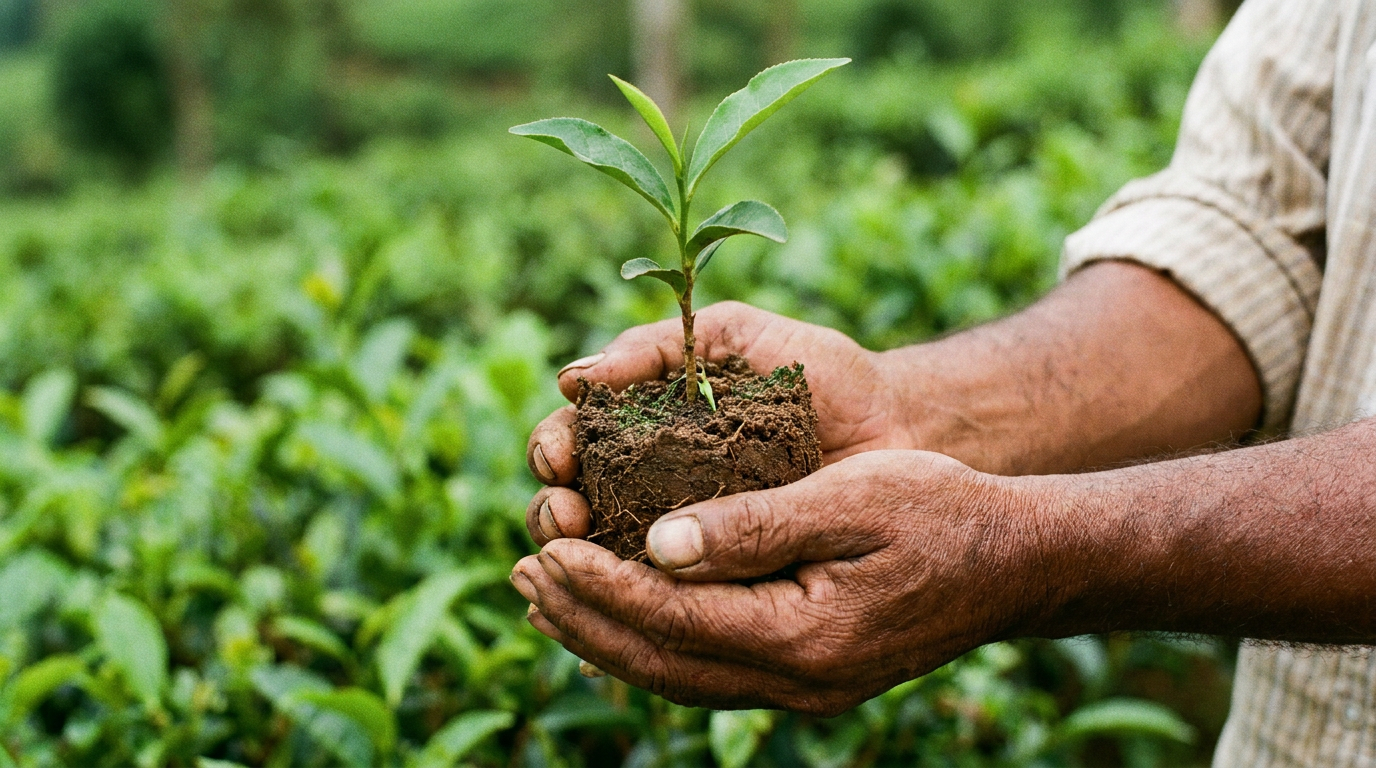
When we are talking about regenerative agriculture, we are specifically talking about how something is grown and how agricultural practices can restore rather than deplete the land.
The Rodale Institute’s original principles of regenerative agriculture are a good place to start. Rodale has been developing the concept of regenerative organic agriculture for decades, and its original framework focuses on seven principles: pluralism, protection, purity, permanence, peace, potential and progress.
But what does that mean when you are actually sourcing ingredients?
A simple regenerative sourcing checklist. Ask your supplier:
How do the farms build and protect healthy soil?
Can they tell you about composting, organic matter, erosion prevention, ground cover or other practices being used?
How do they protect biodiversity?
Are native plants, forests, waterways, wildlife habitat and other species protected alongside the commercial crop?
Are synthetic pesticides, herbicides or fertilizers being used?
Regenerative does not automatically mean organic, so ask specifically what is being applied to the crop.
How is water managed and protected?
What is being done to prevent erosion, runoff and contamination while improving the land's ability to retain water?
Is the farm dependent on a monoculture, or is there diversity in the agricultural system?
This can look very different depending on the crop and region.
What practices are appropriate for this particular crop and ecosystem?
Regenerative agriculture should not become another rigid checklist disconnected from the land. Livestock integration, for example, may make sense on some farms but is not required for a tea garden to be regenerative.
Can the supplier trace the ingredient back to the farms or gardens where it was grown?
If someone cannot tell you where an ingredient came from, it becomes much harder to substantiate claims about how it was grown.
Can they show you?
Ask for certifications when available, but also ask for farm documentation, photographs, agricultural practices, measurements and direct information from the producers themselves.
Certification is valuable, but it is not the whole story
We believe in it and pursue it wherever it makes sense. But a certification logo and regenerative agriculture are not necessarily the same thing.
The more this word is used without understanding what is actually happening on the land, the less it means. And that ultimately hurts the farmers who have been caring for their soil, ecosystems and communities this way for generations.
Want to see what regenerative sourcing looks like in practice?
Request Catalog & Samples