If you source bulk steamed green tea for beverage, supplement, tea, or food manufacturing, you have likely seen significant changes in supply and pricing from traditional sources.
Japanese green tea prices have increased by more than 300% in recent years as an aging agricultural workforce, rising production costs, and rapidly growing global demand for matcha put pressure on available supply. As more production shifts toward higher-value tencha, the tea used to produce matcha, manufacturers that rely on sencha and other steamed green teas are facing both higher prices and less predictable availability.
These pressures are structural, and prices are not expected to return to previous levels in the foreseeable future. For companies built around steamed green tea, this is increasingly a sourcing challenge rather than simply a pricing issue.
An African-Sourced Alternative
3 Mountains Tea Collective is a bulk green tea supplier offering steamed green tea from select African gardens using Japanese-style steaming methods.
Our sourcing includes Camellia sinensis var. sinensis, the small-leaf tea variety widely associated with premium green tea production. Combined with steam processing, it provides manufacturers with a compelling alternative when evaluating new ingredient sources.
Steaming fresh tea leaves immediately after harvest stops oxidation and helps preserve the bright color, fresh vegetal flavor, and catechin profile associated with steamed green teas. This makes processing method particularly important when evaluating alternatives for an existing formulation.
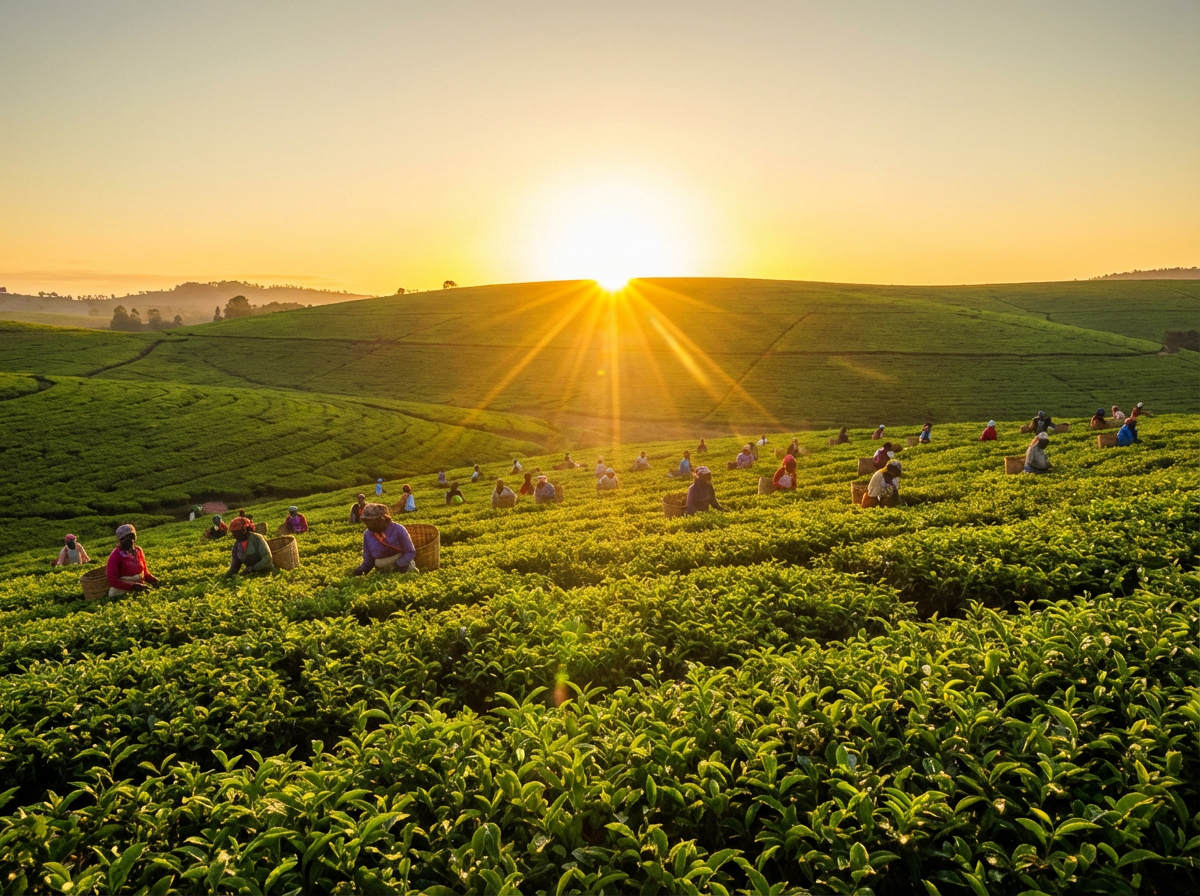
Our partner factories in Malawi now have master tea makers from Japan on-site, bringing decades of expertise in steaming techniques and even developing matcha processing capabilities. This combination of African terroir with Japanese processing knowledge creates a unique and compelling product for commercial buyers.
Our steamed green tea offers manufacturers another option when traditional supply is unavailable, cost prohibitive, or difficult to secure consistently.
We recommend evaluating it against your existing specification rather than assuming any agricultural ingredient is a direct 1:1 replacement. Samples and technical documentation are available to support that process.
Bulk Steamed Green Tea for Commercial Applications
As a steamed green tea supplier and wholesale importer, 3 Mountains provides:
- Bulk steamed green tea for commercial applications
- Organic and Fair Trade certified options
- Full supply-chain traceability
- Third-party testing documentation available
- Year-round supply
- Commercial volumes and volume-based pricing
- Samples for R&D and formulation testing
We work with beverage manufacturers, tea companies, supplement and nutraceutical brands, specialty food companies, and other commercial ingredient buyers.
Looking for a Steamed Green Tea Supplier?
If pricing or availability from traditional sources is creating challenges for your business, we can help you evaluate an alternative.
Contact [email protected] with your approximate annual volume, current specification, and application. We can recommend an appropriate grade, provide pricing, and arrange samples for evaluation.
References
- Japanese Ministry of Agriculture, Forestry and Fisheries (MAFF). Tea Production Statistics: Annual Survey of Farmland and Farm Households Engaged in Tea Cultivation. Tokyo: MAFF.
- Statista / Tea & Herbal Infusions Europe. Global matcha demand forecasts and market growth data, 2020-2025. Published 2024.
- Cabrera, C., Artacho, R., and Gimenez, R. "Beneficial Effects of Green Tea: A Review." Journal of the American College of Nutrition 25, no. 2 (2006): 79-99.
- Engelhardt, U.H. "Chemistry of Tea." In Comprehensive Natural Products II: Chemistry and Biology. Oxford: Elsevier, 2010.