Clean label is no longer just a marketing claim. For many beverage brands, it is now part of product development, procurement, and consumer trust.
That is especially true with tea.
When a beverage says it contains tea, buyers and consumers may assume it is made from brewed tea leaves. But in many cases, the product may be made with tea extract instead.
Tea extract can be useful. It is often chosen for efficiency, solubility, consistency, and ease of manufacturing. But it is not the same as brewing real tea from the leaf.
What whole leaf tea actually is
Whole leaf tea starts with the actual tea plant, Camellia sinensis. Black, green, white, and oolong tea all come from this plant. The difference comes from origin, harvest, oxidation, and processing.
That matters because whole leaf tea carries more of its agricultural identity. It has a place, a grade, a season, a flavor profile, and a sourcing story.
For clean label beverage brands, that can be a major advantage.
Why it fits clean label
“Organic black tea” or “organic green tea” is easy for consumers to understand. It feels real because it is real. It also gives brands more room to talk about origin, sourcing, quality, and how the product is brewed.
Tea extract may still be a good fit for certain products. But it can raise more questions. How was it processed? Was it spray dried? Were carriers used? Was flavor or aroma lost during processing? Is it still delivering the taste profile the brand wants?
The biggest difference is quality, processing, and flavor
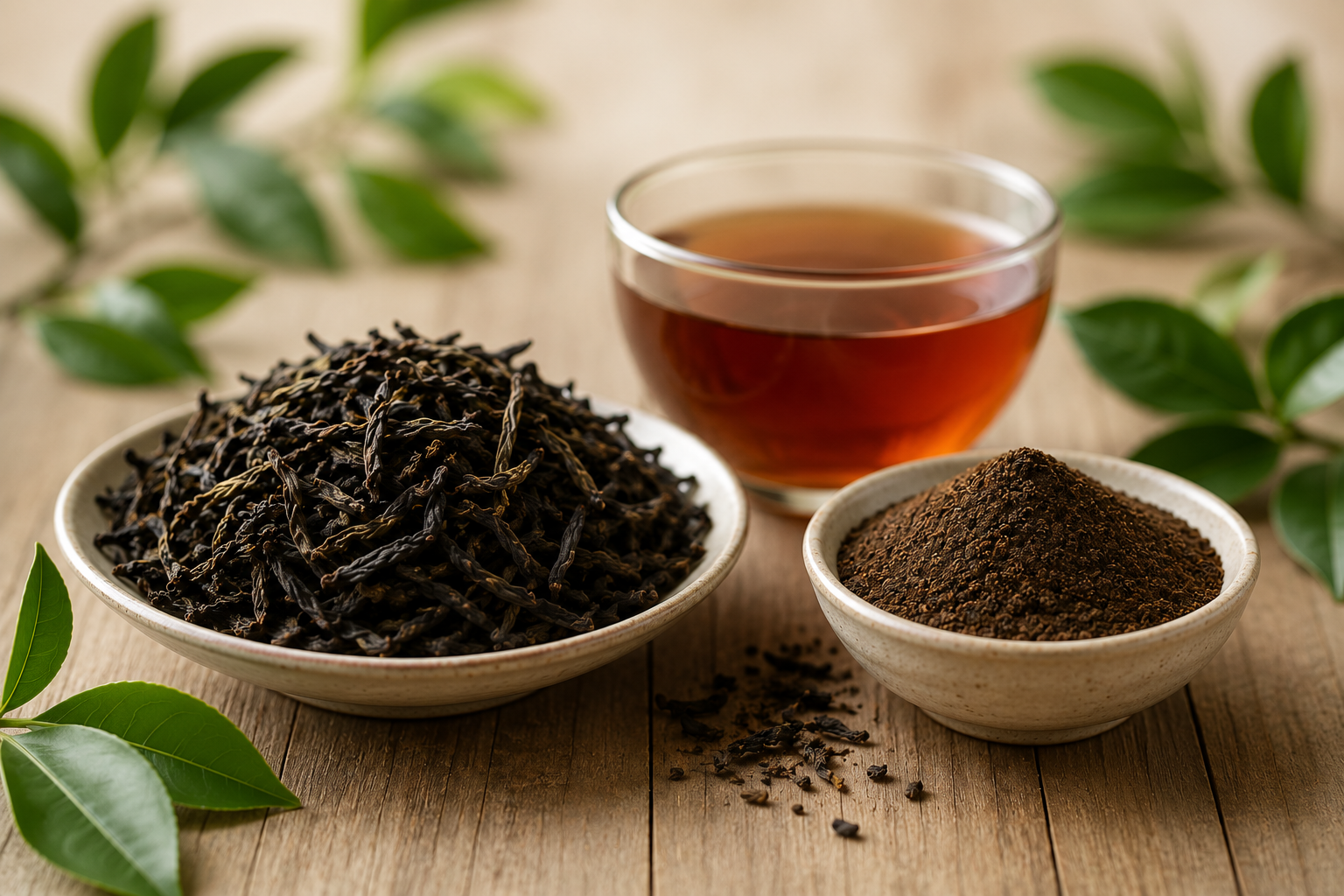
Whole leaf tea stays closer to the plant. Extract is usually brewed or extracted, concentrated, and often spray dried into powder. That can be useful for manufacturing, but it is a more processed ingredient path.
For clean label beverages, buyers may prefer whole leaf tea because it offers clearer sourcing, stronger natural flavor, and fewer questions about what happened between the leaf and the finished product.
Flavor is the real advantage
Whole leaf tea can bring natural complexity: malt, honey, citrus, floral notes, tannin, briskness, body, or softness depending on the origin and grade. That flavor can help reduce the need for heavy sweeteners, added flavors, or masking agents.
For beverage developers, that is valuable. The tea itself can do more of the work.
A strong black tea can add structure. A green tea can bring brightness. A white tea can add lift. A well-sourced tea can make a beverage taste more premium without complicating the ingredient list.
The bottom line
That is why whole leaf tea is becoming more relevant in modern beverage development. It supports cleaner labels, better taste, and stronger sourcing transparency.
Tea extract has its place.
But for brands building around real ingredients, clean label positioning, and premium flavor, whole leaf tea offers something extract often cannot: a direct connection to the plant, the place, and the cup.
Part 2: What Is Spray Drying and Why It Matters
A closer look at how tea extracts are made, the carrier question, and why some brands are choosing a different path.
Read Part 2Ready to explore whole leaf tea for your next formulation?
Request Catalog & Samples