Tea extracts are common in beverage, food, and supplement manufacturing. They can be practical, efficient, and useful for certain applications.
But for clean label beverage brands, it is important to understand how extracts are usually made.
How tea extract is made
In simple terms, tea extract starts by brewing or extracting tea. The liquid is then concentrated so it contains more tea solids and less water. From there, it may be dried into a powder.
One of the most common ways to do this is spray drying.
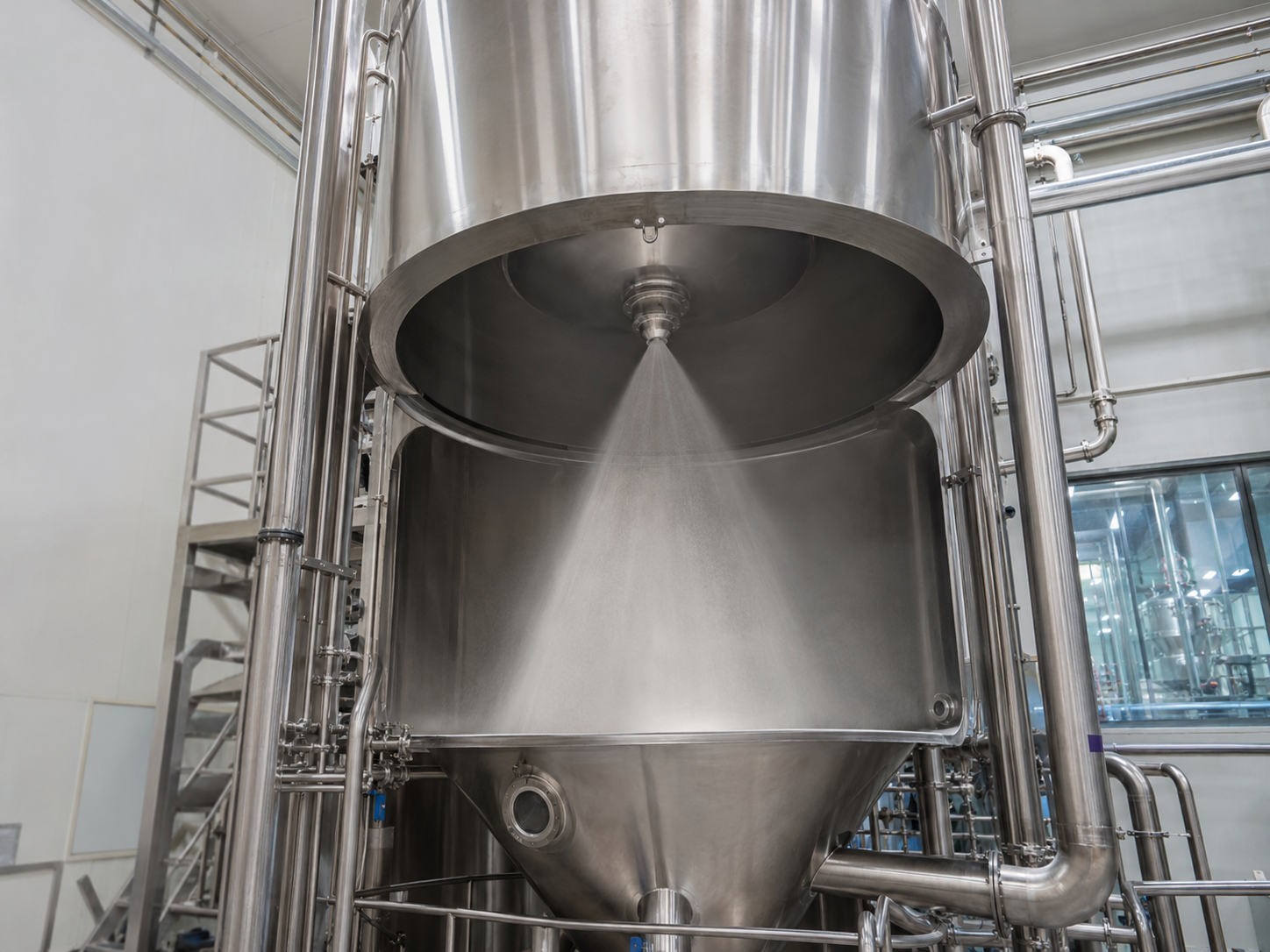
With spray drying, concentrated tea liquid is sprayed into a chamber of hot air. The water evaporates quickly, leaving behind a dry powder. That powder can then be packed, shipped, stored, and used in manufacturing.
This process is widely used because it solves real production needs. Spray-dried tea extract can be shelf-stable, easy to dose, easier to transport, and useful in dry mixes, instant beverages, supplements, concentrates, and high-volume manufacturing systems.
That does not make it bad. It just makes it different from brewed whole leaf tea.
The carrier question
One of the most important questions with spray-dried tea extract is whether a carrier was used.
Many plant and tea extracts need help drying properly. Carriers or drying aids may be added before spray drying to improve yield, reduce stickiness, help the powder flow, protect the extract, or improve solubility.
Common carriers may include maltodextrin, gum arabic, starches, or other food-grade materials.
For beverage brands, this matters because the ingredient listed as “green tea extract” may not always be only green tea solids. It may also include a carrier used during processing.
Why upstream transparency matters
In some cases, a carrier may not appear separately on the finished product label. Certain incidental additives and processing aids may not need to be declared if they are present at insignificant levels and have no technical or functional effect in the finished food.
That is why buyers should not rely only on the consumer-facing ingredient panel.
Even if a carrier does not appear separately on the finished label, buyers should still know whether one was used. Consumer watchdogs and third-party labs can sometimes test finished products and report what they find. For clean label brands, transparency upstream is the safer path.
A familiar example
A familiar example is “green tea extract” on an energy drink can.
When consumers see green tea extract, they may assume the beverage was brewed from green tea leaves. In many cases, that is not what it means.
Green tea extract is usually a concentrated ingredient made from green tea. It may be used for caffeine, polyphenols, natural energy positioning, or label appeal. It can be useful, but it is not the same as brewed green tea.
That is why processing matters. Was the extract spray dried? Were carriers used? Is it standardized? Is it being used for flavor, function, or simply as a recognizable ingredient on the label?
The better procurement questions
- Is the tea extract 100% tea solids?
- Was a carrier used during spray drying?
- If yes, what carrier was used?
- What percentage of the extract is carrier?
- Does the carrier need to be declared on the final label?
- Does the carrier affect clean label, organic, allergen, or formulation requirements?
Where 3 Mountains fits
At 3 Mountains, we do not make spray-dried tea extracts. We supply real tea for brands that want a clean label alternative with strong flavor, sourcing transparency, and competitive pricing.
For many beverage applications, brewed tea or whole leaf tea can offer a better sensory result. It can taste more natural, provide more origin character, and give the final product a simpler ingredient story.
Both have a role
Tea extract can be the right tool when a brand needs instant solubility, high concentration, or a powder format.
Whole leaf tea can be the better tool when the brand needs clean flavor, real ingredient positioning, and a more transparent supply chain.
The key is knowing what you are buying and choosing the format that supports the product you are trying to build.
Part 1: Real Tea vs. Tea Extract
Why whole leaf tea is becoming a stronger choice for clean label beverage brands.
Read Part 1Ready to explore whole leaf tea for your next formulation?
Request Catalog & Samples